Why Hydrofluoric Acid is Effective in the Stainless Steel Industry
2024-06-08
The stainless steel industry is a critical sector in modern manufacturing, known for producing materials that offer superior resistance to
corrosion and high durability. However, the processes involved in creating and maintaining stainless steel often require the use of various
chemicals, one of which is hydrofluoric acid (HF). Here,FSSF Chemical will lead you delve into the necessity of hydrofluoric acid in the
stainless steel industry, exploring its specific applications and the reasons behind its effectiveness.
What is Hydrofluoric Acid?
Hydrofluoric acid is a solution of hydrogen fluoride in water. It is a highly corrosive acid capable of dissolving many materials, particularly
oxides and silicates, which makes it invaluable in various industrial applications. Despite its corrosive nature, HF is widely used in industries
ranging from glass etching to metal processing, including the stainless steel industry.
Applications of Hydrofluoric Acid in the Stainless Steel Industry:
1、Acid Pickling
Acid pickling is a vital process in stainless steel manufacturing. It involves removing surface oxides, scales, and other contaminants that form
during hot working processes like rolling, forging, and heat treatment. These surface impurities can degrade the material's corrosion resistance
and aesthetic quality.
Hydrofluoric acid, often used in combination with nitric acid (forming a mixture known as pickling paste or solution), effectively dissolves these
oxides and scales. The HF attacks the silicon-rich layers and chromium oxides on the stainless steel surface, which are typically resistant to
other acids. This cleaning action ensures a smooth, clean, and uniform surface, essential for subsequent manufacturing steps.

2、Weld Cleaning and Passivation
Welding stainless steel can create areas of discoloration and oxide formation around the weld seam, known as weld heat tint. These oxides are
not only unsightly but also less corrosion-resistant than the base metal. HF-based pickling pastes and gels are applied to these areas to remove
the heat tint and restore the uniformity of the surface.
Following weld cleaning, passivation is often performed to enhance the stainless steel's corrosion resistance. Passivation involves treating the steel
with an oxidizing acid, typically a nitric acid solution, to form a thin, protective oxide layer. Prior to passivation, the surface must be free of contaminants,
and hydrofluoric acid plays a crucial role in ensuring this cleanliness.
3、Descaling
During the production and processing of stainless steel, scales (thick, stubborn oxide layers) can form, especially after high-temperature treatments.
These scales are difficult to remove and can affect the material's properties and appearance. Hydrofluoric acid, either alone or in combination with other
acids, is highly effective in breaking down and removing these tough scales, thus preparing the steel for further processing or finishing.
4、Surface Preparation for Coating and Plating
For stainless steel components that require additional coatings or plating (such as electroplating with chromium or nickel), surface preparation is critical.
A clean, oxide-free surface ensures proper adhesion of the coating or plating material. Hydrofluoric acid treatments remove any residual oxides and
contaminants, ensuring an optimal surface for subsequent layers.
Why Hydrofluoric Acid is Effective
Hydrofluoric acid's effectiveness in the stainless steel industry can be attributed to several key properties:
1、Reactivity with Oxides: HF is highly reactive with silicon dioxide (SiO2) and other oxides, which are commonly found on stainless steel surfaces
after various processing steps. This reactivity allows HF to dissolve these oxides effectively, ensuring a clean, smooth surface.
2、Ability to Remove Tough Scales: The tenacity of scales formed during high-temperature treatments requires a potent acid for removal. HF's unique
chemical properties enable it to break down these scales efficiently.
3、Versatility: HF can be used in various forms (liquid, paste, or gel) and concentrations, making it versatile for different applications, from large-scale acid
pickling baths to precise weld cleaning.
4、Complementary Action with Nitric Acid: When combined with nitric acid, HF provides a synergistic effect, enhancing the cleaning process. Nitric acid
helps in the oxidation of iron, while HF targets the silicon and chromium oxides, ensuring comprehensive cleaning.
Hydrofluoric acid (HF) is crucial in the stainless steel industry due to its effectiveness in acid pickling, weld cleaning, descaling, and surface preparation. Its ability
to dissolve oxides and scales ensures clean, corrosion-resistant surfaces, essential for high-quality stainless steel products.
However, HF is highly corrosive and toxic, necessitating stringent safety measures. Proper use of protective equipment, thorough training, and adequate ventilation
are essential to ensure worker safety. Additionally, strict adherence to environmental regulations for HF disposal is crucial to minimize its impact.
In summary, while HF is indispensable for its cleaning and preparation capabilities in stainless steel manufacturing, careful handling and safety protocols are vital to
mitigate its risks.
Application of Ammonium Hexafluorozirconate in Electroplating
Why Aluminum Fluoride Can be Used in Ceramics Industry
Related Article
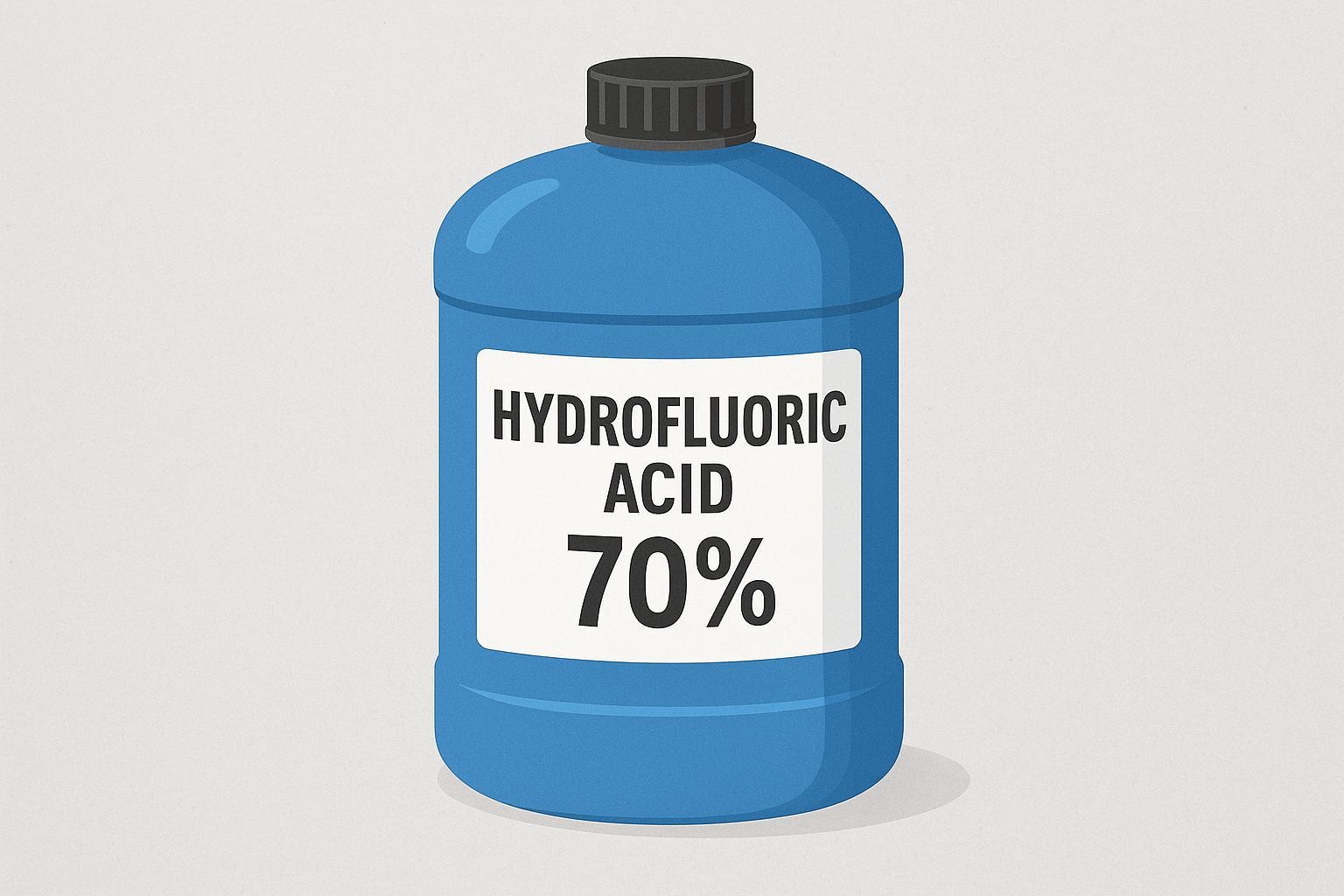
Discover why 70% hydrofluoric acid is preferred globally — balancing reactivity, safety, and cost-efficiency for glass, metal, and semiconductor industries.
Why International Buyers Prefer Purchasing Hydrofluoric Acid with 70% Concentration

FSSF Chemical leads you to discover the industrial uses of fluoroboric acid (HBF₄), including applications in electroplating, metal cleaning, catalysis, pharmaceuticals, and battery technology.
The Comprehensive Industrial Applications of Fluoroboric Acid (HBF4)