Why International Buyers Prefer Purchasing Hydrofluoric Acid with 70% Concentration
2025-10-22
In the global chemical market, hydrofluoric acid (HF) plays a crucial role as a fundamental raw material in industries such as metallurgy, glass etching, semiconductor manufacturing, fluorocarbon production, and surface treatment. While HF is available in various concentrations — typically ranging from 40% to 99% — the 70% concentration has become the most preferred grade among international buyers. This preference is not accidental; it is driven by a combination of technical, economic, safety, and logistical factors that make 70% HF the most practical and cost-effective option for industrial applications.

1、Technical Balance Between Reactivity and Stability
Hydrofluoric acid is a highly reactive chemical, and its corrosive nature intensifies with increasing concentration. While concentrations above 90% offer stronger chemical activity, they also pose significant handling and stability challenges.
At 70%, however, hydrofluoric acid maintains an optimal balance between chemical reactivity and operational safety. It is strong enough to effectively perform key industrial tasks — such as dissolving oxides, cleaning glass, and etching silicon wafers — while remaining stable enough to be stored, shipped, and diluted without excessive vaporization or decomposition.
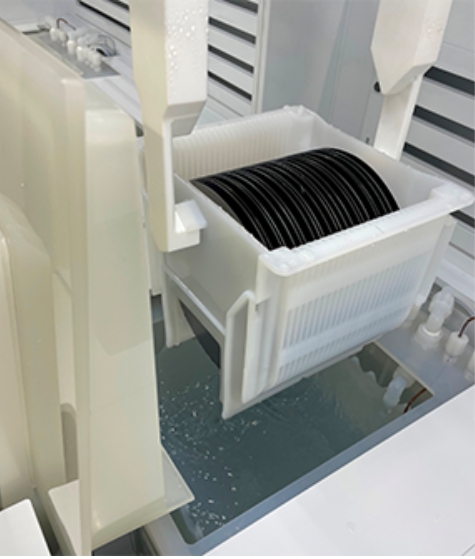
This concentration is particularly suitable for metal surface treatments and chemical polishing, where controlled reaction rates are essential. High-purity electronics manufacturers also appreciate 70% HF because it allows precise control during semiconductor wafer etching, avoiding over-etching or damage to microstructures.
2、Ease of Transportation and Storage
Transportation regulations for hydrofluoric acid vary across countries, but in general, the higher the concentration, the stricter the safety requirements. Concentrated HF (above 90%) is classified as an extremely hazardous material that requires special packaging materials such as PTFE or Monel and must often be transported under temperature-controlled conditions.
By contrast, 70% HF can be safely shipped in fluoropolymer-lined containers or plastic drums, significantly reducing logistics costs and simplifying customs procedures. This makes it a preferred grade for international buyers who must balance product quality with transportation safety.
In addition, 70% HF remains liquid and stable under most ambient conditions, minimizing the risk of leaks, gas evolution, or container degradation during long-distance sea or land transport.
3、Economic Efficiency and Dilution Flexibility
From a cost-efficiency standpoint, 70% hydrofluoric acid provides the best ratio between active HF content and total logistics cost. Lower concentrations (like 40% or 50%) require more storage volume and increase shipping costs per ton of active HF. On the other hand, higher concentrations are not only more expensive to produce but also more difficult to handle safely.
International buyers often prefer 70% HF because it offers flexibility — it can be diluted on-site to obtain the exact concentration needed for specific processes. For example, a glass-etching plant may dilute 70% HF down to 10–15% for precision etching, while a metal treatment facility might use 50–60% for oxide removal. This adaptability allows companies to purchase a single, standardized grade of HF and use it across multiple applications, streamlining procurement and inventory management.
4、Global Industrial Standards and Compatibility
Over time, the 70% concentration has become an informal global standard in many industries. Equipment suppliers, material compatibility charts, and safety procedures are often designed with this concentration in mind.
For example, semiconductor manufacturers, glass processors, and aluminum refineries around the world have established process parameters optimized for 70% HF. Using this concentration ensures compatibility with standard equipment and global supply chains, reducing the need for customized systems or additional testing.
For example, semiconductor manufacturers, glass processors, and aluminum refineries around the world have established process parameters optimized for 70% HF. Using this concentration ensures compatibility with standard equipment and global supply chains, reducing the need for customized systems or additional testing.
This standardization not only simplifies production but also enhances product consistency and quality assurance, both of which are vital for international trade.
5、Safety and Environmental Considerations
Hydrofluoric acid’s extreme toxicity requires strict safety management. The 70% grade presents a manageable compromise between potency and safety. While still hazardous, it emits fewer HF vapors than higher-concentration grades, reducing the risk of worker exposure and environmental release.
Moreover, many countries have adopted stricter environmental and occupational safety regulations for handling concentrated acids. The 70% concentration allows users to comply more easily with these standards, avoiding the higher costs and regulatory hurdles associated with 90–99% HF.
6、Reliable Supply Chain and Market Availability
Finally, the popularity of 70% hydrofluoric acid is also a result of market dynamics. Because most international buyers demand this grade, producers worldwide — particularly in China, the United States, and Europe — have standardized their production processes around 70% HF. This results in stable global supply, competitive pricing, and shorter delivery times.
Buyers benefit from an abundant and reliable market, reducing procurement risks and ensuring consistency in quality across different suppliers.
The international preference for 70% hydrofluoric acid arises from a combination of practical and economic advantages. It offers the ideal compromise between reactivity, safety, stability, and cost-effectiveness. This concentration is versatile, widely standardized, and well-supported by global supply chains — making it the most logical choice for industrial buyers involved in chemical manufacturing, glass processing, metal treatment, and high-tech production.
In essence, 70% HF has become the global benchmark not only because it performs efficiently across various applications, but also because it ensures safety, compliance, and reliability — three key factors that international buyers value most in today’s competitive industrial environment.
The Comprehensive Industrial Applications of Fluoroboric Acid (HBF4)
Related Article

FSSF Chemical leads you to discover the industrial uses of fluoroboric acid (HBF₄), including applications in electroplating, metal cleaning, catalysis, pharmaceuticals, and battery technology.
The Comprehensive Industrial Applications of Fluoroboric Acid (HBF4)
Fluorosilicic acid (H2SiF6), a highly reactive inorganic compound, plays a pivotal role in modern aluminum electrolysis by optimizing electrolyte performance
and enhancing production efficiency.
and enhancing production efficiency.
The Application and Optimization of Fluorosilicic Acid in Aluminum Electrolysis Production