The Versatile Role of Zinc Fluoride in the Rubber Industry
2024-03-05
Zinc fluoride (ZnF2) plays a crucial and versatile role in the rubber industry, particularly as a rubber accelerator.
This compound is utilized to enhance the vulcanization process of rubber, leading to improved mechanical properties
and overall performance. In this article, we will explore the key applications of zinc fluoride in the rubber industry, focusing
on its catalytic role in rubber vulcanization.

Rubber Vulcanization Process:
Rubber, in its raw form, lacks desirable mechanical properties such as elasticity, durability, and resistance to wear.
Vulcanization, a process discovered by Charles Goodyear, involves the addition of sulfur to rubber, forming cross-links
between polymer chains and transforming the material into a more durable and versatile substance. Zinc fluoride plays
a pivotal role as a catalyst in this complex chemical reaction.
Catalytic Mechanism:
Zinc fluoride functions as a catalyst in the vulcanization process by facilitating the formation of sulfur bridges between polymer chains.
This catalytic activity expedites the cross-linking reactions, allowing for a more efficient and controlled vulcanization. The presence of
zinc fluoride helps optimize the balance between cross-linking density and rubber flexibility.
Advantages of Zinc Fluoride in Rubber Vulcanization:
1、Accelerated Vulcanization: Zinc fluoride accelerates the vulcanization reaction, significantly reducing the time required for the process.
This acceleration enhances production efficiency in the rubber industry.
2、Improved Mechanical Properties: The catalytic role of zinc fluoride contributes to the formation of a well-structured vulcanization network
within the rubber matrix. This results in improved tensile strength, elasticity, and wear resistance of the final rubber product.
3、Enhanced Thermal Stability: Rubber vulcanized with zinc fluoride exhibits enhanced thermal stability, making it suitable for a broader range
of applications, especially those involving varying temperature conditions.
4、Consistent Quality: The use of zinc fluoride ensures uniform vulcanization throughout the rubber material, leading to consistent product
quality and performance.
Applications in Rubber Industry:
Zinc fluoride finds widespread applications in various sectors of the rubber industry, including the production of tires, conveyor belts, seals,
and automotive components. Its ability to enhance the vulcanization process makes it a valuable additive for manufacturers seeking high-quality
and reliable rubber products.

In conclusion, zinc fluoride's role in the rubber industry goes beyond being a mere additive – it is a catalyst that accelerates and optimizes the
vulcanization process. The advantages it imparts, such as improved mechanical properties and thermal stability, make it an indispensable component
in the production of high-performance rubber products. As the rubber industry continues to evolve, zinc fluoride remains a key player in shaping the properties
and applications of rubber materials.
The Versatile Application of Sodium Fluorosilicate in Water Treatment
The Pervasive Role of Sodium Fluoride in Toothpaste and Mouthwash
Related Article
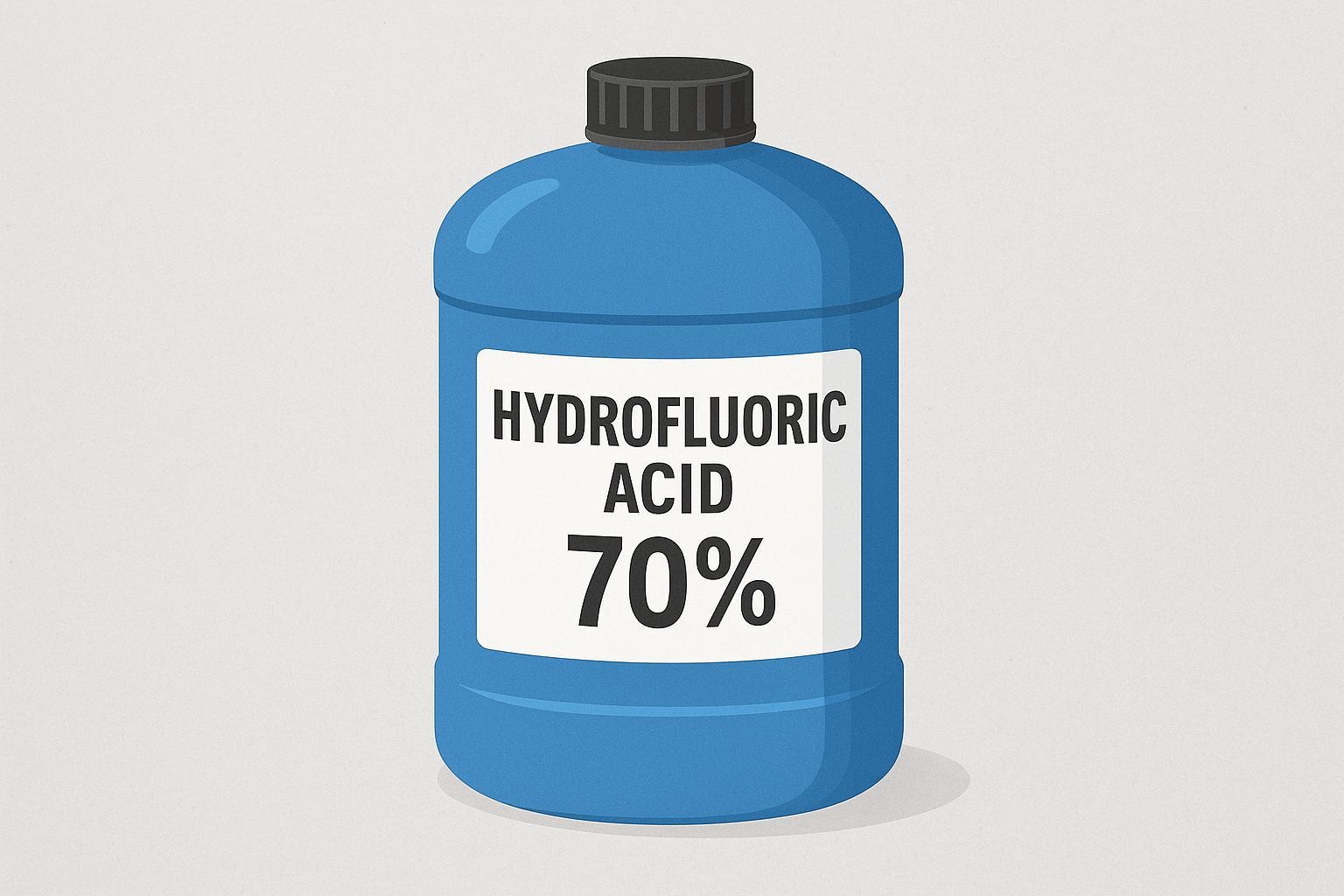
Discover why 70% hydrofluoric acid is preferred globally — balancing reactivity, safety, and cost-efficiency for glass, metal, and semiconductor industries.
Why International Buyers Prefer Purchasing Hydrofluoric Acid with 70% Concentration

FSSF Chemical leads you to discover the industrial uses of fluoroboric acid (HBF₄), including applications in electroplating, metal cleaning, catalysis, pharmaceuticals, and battery technology.
The Comprehensive Industrial Applications of Fluoroboric Acid (HBF4)