The Role of Potassium Fluoride in the Production of Specialty Glass
2024-06-20
Potassium fluoride (KF) is a key ingredient in the production of specialty glass, known for its unique chemical properties and
ability to enhance the glass manufacturing process. Specialty glass is used in various high-tech applications, from optical instruments
to protective coatings, and its production requires precise control over its composition and properties. This article delves into the specific
ways potassium fluoride is used in the production of specialty glass and explains its various roles in the process.
Understanding Potassium Fluoride
Potassium fluoride is an inorganic compound that consists of potassium and fluoride ions. It is highly soluble in water, has a high melting point,
and forms a stable ionic compound. These characteristics make it particularly useful in industrial applications, including glass production.

The Production Process of Specialty Glass
Specialty glass manufacturing involves several stages, including raw material preparation, melting, forming, and annealing. Potassium fluoride
can be introduced at different stages to achieve desired glass properties. Here’s how KF is utilized throughout the process:
1、Raw Material Preparation:
Potassium fluoride is added to the batch of raw materials, which typically includes silica (SiO2), soda ash (Na2CO3), and limestone (CaCO3).
The inclusion of KF helps in adjusting the chemical composition to achieve specific glass properties.
By modifying the batch composition, KF helps in lowering the melting temperature of the mixture, which is crucial for energy efficiency during the
melting phase.
2、Melting:
During the melting phase, the batch of raw materials is heated in a furnace to form a molten glass. Potassium fluoride acts as a flux, reducing the
viscosity and melting point of the mixture.
Lowering the melting point reduces energy consumption and minimizes the thermal load on the furnace, leading to longer furnace life and lower
operational costs. Additionally, reduced viscosity helps in achieving a more homogeneous melt, resulting in higher quality glass with fewer defects.
3、Forming:
The molten glass is shaped into its final form through processes such as blowing, pressing, or drawing. KF’s role in lowering viscosity aids in the
easy formation of complex shapes and fine details.
Enhanced flow properties allow for the precise forming of intricate designs and ensure uniform thickness and smooth surfaces, which are essential
for optical clarity and performance.
4、Annealing:
After forming, the glass is gradually cooled in an annealing oven to relieve internal stresses. While KF’s primary function occurs earlier in the process,
its impact on glass composition continues to influence the annealing behavior.
Improved composition and homogeneity due to KF lead to fewer defects and stresses within the glass, resulting in a more durable and stable product.
Specific Roles and Benefits of Potassium Fluoride in Specialty Glass
1、Optical Enhancements:
Potassium fluoride can alter the refractive index of glass, making it ideal for high-precision optical components like lenses, prisms, and fiber optics.
Adjusting the refractive index is crucial for ensuring that optical devices perform with high accuracy and minimal distortion.
2、Chemical Durability:
The inclusion of KF in glass formulations enhances chemical resistance, making the glass less susceptible to attack by acids, bases, and other corrosive
substances. This property is especially valuable in laboratory glassware and chemical processing equipment.
3、Mechanical Strength:
Glasses containing KF exhibit improved mechanical properties, including increased hardness and scratch resistance. This makes them suitable for use in
demanding environments, such as protective coatings and impact-resistant windows.
4、Thermal Stability:
KF contributes to the thermal stability of specialty glass, allowing it to withstand rapid temperature changes without cracking. This property is essential for glass
used in high-temperature applications like cookware and scientific instruments.
5、Homogeneity and Clarity:
By promoting a more uniform melt, KF reduces the occurrence of bubbles and inclusions within the glass. This leads to higher clarity and uniformity, which are
critical for optical applications and decorative glassware.
6、Process Efficiency:
The ability of potassium fluoride to lower the melting point and viscosity of glass mixtures translates into significant energy savings and faster production cycles.
This efficiency not only reduces manufacturing costs but also minimizes the environmental impact of glass production.
Applications of Specialty Glass Enhanced by Potassium Fluoride
1、Optical Instruments:
Specialty glass with precise optical properties is essential for lenses, microscopes, telescopes, and other optical instruments. KF helps in achieving the required
clarity and refractive index for these high-precision devices.

2、Electronics:
In the electronics industry, specialty glass is used in displays, sensors, and other components. The chemical stability and durability provided by KF make it ideal
for these applications.
3、Protective Glass:
Bulletproof and impact-resistant glass benefit from the enhanced mechanical properties imparted by KF. These glasses are used in security applications,
automotive windshields, and protective barriers.
4、Laboratory Equipment:
The chemical resistance and durability of KF-containing glass make it suitable for laboratory glassware, which must withstand harsh chemicals and repeated use.
5、Decorative Glass:
High-quality decorative glass, including art glass and specialty lighting, requires excellent clarity and uniformity. KF ensures that these aesthetic qualities are achieved.
Potassium fluoride is a vital component in the production of specialty glass, offering a range of benefits that enhance the manufacturing process and the properties
of the final product. Its ability to lower the melting point, improve optical and mechanical properties, and enhance chemical durability makes it indispensable in various
high-tech and demanding applications. By incorporating potassium fluoride, manufacturers can produce specialty glass that meets the rigorous requirements of modern
technology and industrial applications, ensuring superior performance and reliability.
The use of potassium fluoride in specialty glass production is a testament to the importance of chemical additives in achieving desired material properties. As the demand
for advanced glass materials continues to grow, the role of potassium fluoride will remain crucial, driving innovation and excellence in the glass industry.
Potassium Fluotitanate in the Production of Specialized Electronic Materials and Components
Application of Ammonium Hexafluorozirconate in Electroplating
Related Article
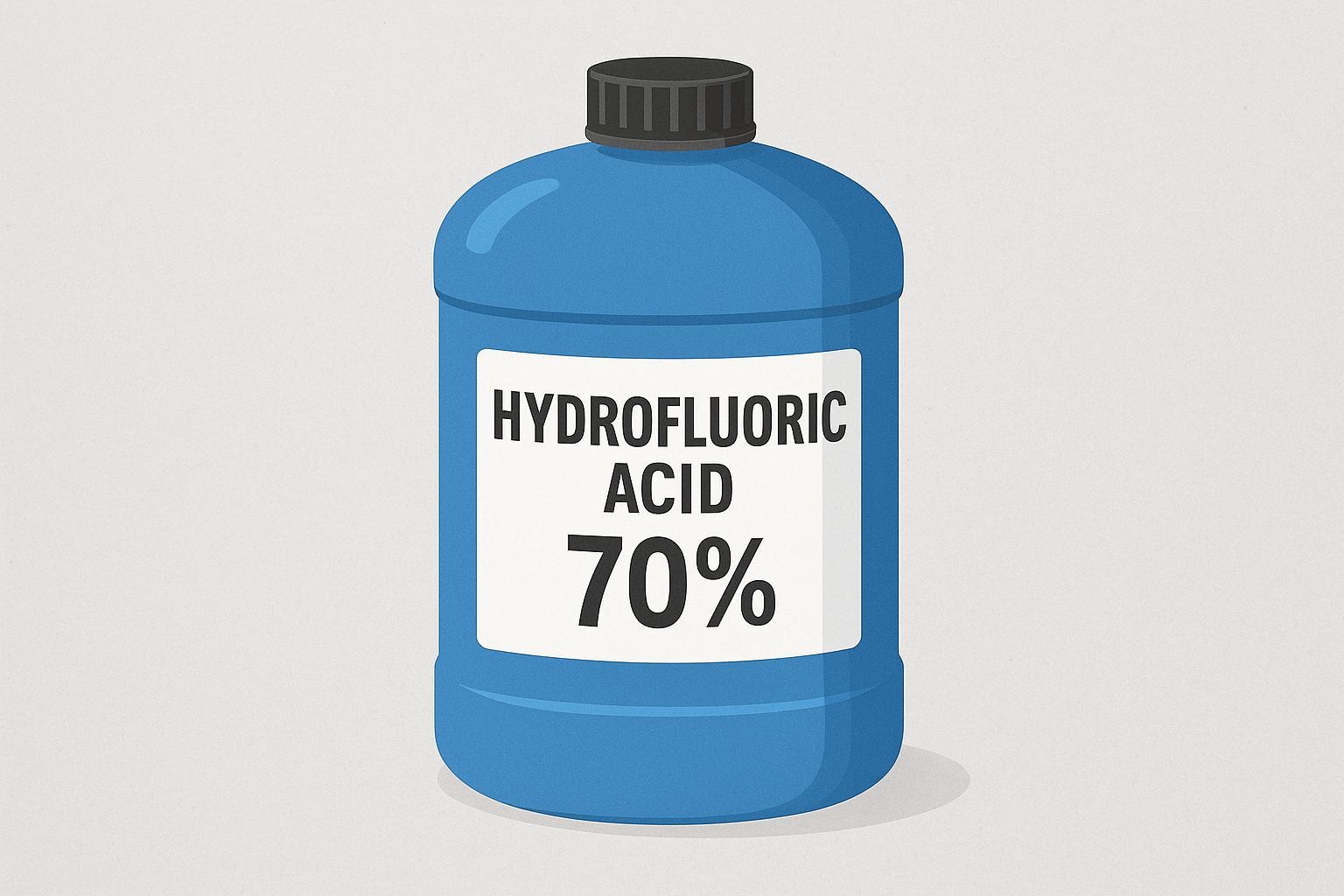
Discover why 70% hydrofluoric acid is preferred globally — balancing reactivity, safety, and cost-efficiency for glass, metal, and semiconductor industries.
Why International Buyers Prefer Purchasing Hydrofluoric Acid with 70% Concentration

FSSF Chemical leads you to discover the industrial uses of fluoroboric acid (HBF₄), including applications in electroplating, metal cleaning, catalysis, pharmaceuticals, and battery technology.
The Comprehensive Industrial Applications of Fluoroboric Acid (HBF4)