Potassium Hydrogen Fluoride: A Crucial Intermediate in Chemical Production
2024-08-14
Potassium Hydrogen Fluoride (KHF2), also known as potassium bifluoride, is a significant chemical compound with the formula KHF2.
It is primarily used as an intermediate in the production of various chemicals, playing a pivotal role in the synthesis and manufacturing
processes of different fluorine-containing compounds. In this article, we will delve into the detailed mechanisms by which Potassium
Hydrogen Fluoride functions as an intermediate in chemical production, and explore its importance in various industrial applications.

Chemical Structure and Properties
Potassium Hydrogen Fluoride is a white crystalline solid that is highly soluble in water. It is composed of potassium ions (K+) and
bifluoride ions (HF2-). The bifluoride ion is a unique species where a proton is shared between two fluoride ions, forming a hydrogen bond.
This compound is known for its strong acidic properties and high reactivity with other chemical species, making it an ideal candidate for
various chemical reactions.
Production of Potassium Hydrogen Fluoride
The production of KHF2 typically involves the reaction of potassium carbonate (K2CO3) with hydrofluoric acid (HF). This reaction results in
the formation of Potassium Hydrogen Fluoride along with water and carbon dioxide as by-products:

This process is carried out in specialized equipment that can handle the corrosive nature of hydrofluoric acid, ensuring that the reaction
proceeds efficiently and safely.
Role as an Intermediate in Chemical Synthesis
1、Synthesis of Fluoride Salts
One of the primary applications of Potassium Hydrogen Fluoride is in the synthesis of various fluoride salts, such as potassium fluoride (KF)
and sodium fluoride (NaF). These compounds are widely used in industries ranging from pharmaceuticals to electronics. KHF2 serves as a
precursor in these reactions, where it undergoes further chemical transformations to yield the desired fluoride products. For instance, when KHF2
is heated, it decomposes to form potassium fluoride and hydrogen fluoride:

This reaction is particularly useful in the preparation of anhydrous fluoride salts, which are essential in many industrial processes.
2、Production of Organofluorine Compounds
Potassium Hydrogen Fluoride is also crucial in the production of organofluorine compounds, which are organic molecules containing carbon-fluorine
bonds. These compounds are integral to various applications, including pharmaceuticals, agrochemicals, and materials science. KHF₂ is often used
as a fluorinating agent, where it introduces fluorine atoms into organic molecules. This process is known as nucleophilic fluorination, where the bifluoride
ion acts as a nucleophile, replacing other functional groups in the organic substrate with fluorine.
For example, in the synthesis of fluoroaromatics, KHF2 can be used to substitute a halogen atom (such as chlorine or bromine) in an aromatic compound
with a fluorine atom. This reaction is typically carried out under specific conditions to achieve high yields and selectivity:

Here, Ar represents an aromatic group, and X is the halogen atom being replaced. The resulting fluoroaromatics are valuable intermediates in the production
of advanced materials and pharmaceuticals.
3、Manufacture of Hydrofluoric Acid
Another critical application of Potassium Hydrogen Fluoride is in the production of hydrofluoric acid (HF), a highly corrosive acid used in a wide range of industrial
processes, including glass etching, metal processing, and chemical synthesis. KHF2 can be used as a source of hydrogen fluoride, where it is decomposed under
controlled conditions to release HF gas. This process is particularly advantageous in situations where pure, anhydrous HF is required, as the decomposition of KHF2
can be finely tuned to produce high-purity HF.
4、Preparation of Specialty Chemicals
Potassium Hydrogen Fluoride is also employed in the preparation of various specialty chemicals, including fluorosilicic acid (H2SiF6) and fluoroborates (such as
potassium fluoroborate, KBF4). These chemicals have specialized applications in industries such as metallurgy, ceramics, and water treatment. In these processes,
KHF2 acts as a fluorinating agent, introducing fluoride ions into the chemical structure of the target compound.
For example, in the production of potassium fluoroborate, KHF2 reacts with boric acid (H3BO3) to form KBF4 and water:

Potassium fluoroborate is then used as a flux in the metallurgical industry, where it helps to lower the melting point of metals and facilitates the removal of impurities.
Industrial Applications of KHF₂-Derived Compounds
The compounds produced using Potassium Hydrogen Fluoride as an intermediate find extensive use in various industries. For instance:
● Pharmaceuticals: Fluoride-containing compounds, such as fluoroaromatics and organofluorine molecules, are key components in many pharmaceuticals, contributing
to the efficacy and stability of drugs.
● Electronics: Fluoride salts like potassium fluoride are used in the production of optical fibers, semiconductors, and other electronic components due to their high
purity and reactivity.
● Metallurgy: Compounds such as potassium fluoroborate are essential in refining and processing metals, particularly in the production of high-purity aluminum and
other non-ferrous metals.
● Chemical Manufacturing: Hydrofluoric acid, produced from KHF₂, is a vital reagent in the chemical industry, used for alkylation, etching, and cleaning processes.
Potassium Hydrogen Fluoride is an indispensable intermediate in the production of a wide range of chemicals, from fluoride salts to organofluorine compounds and
specialty chemicals. Its role in these processes highlights its importance in various industrial sectors, including pharmaceuticals, electronics, metallurgy, and chemical
manufacturing. Despite its corrosive nature, KHF₂'s versatility and reactivity make it a critical component in modern chemical synthesis, contributing to advancements
in technology and industry.
How Hydrofluoric Acid is Used as a Plastic Etchant
How is Magnesium Fluorosilicate as a Waterproofing Agent?
Related Article
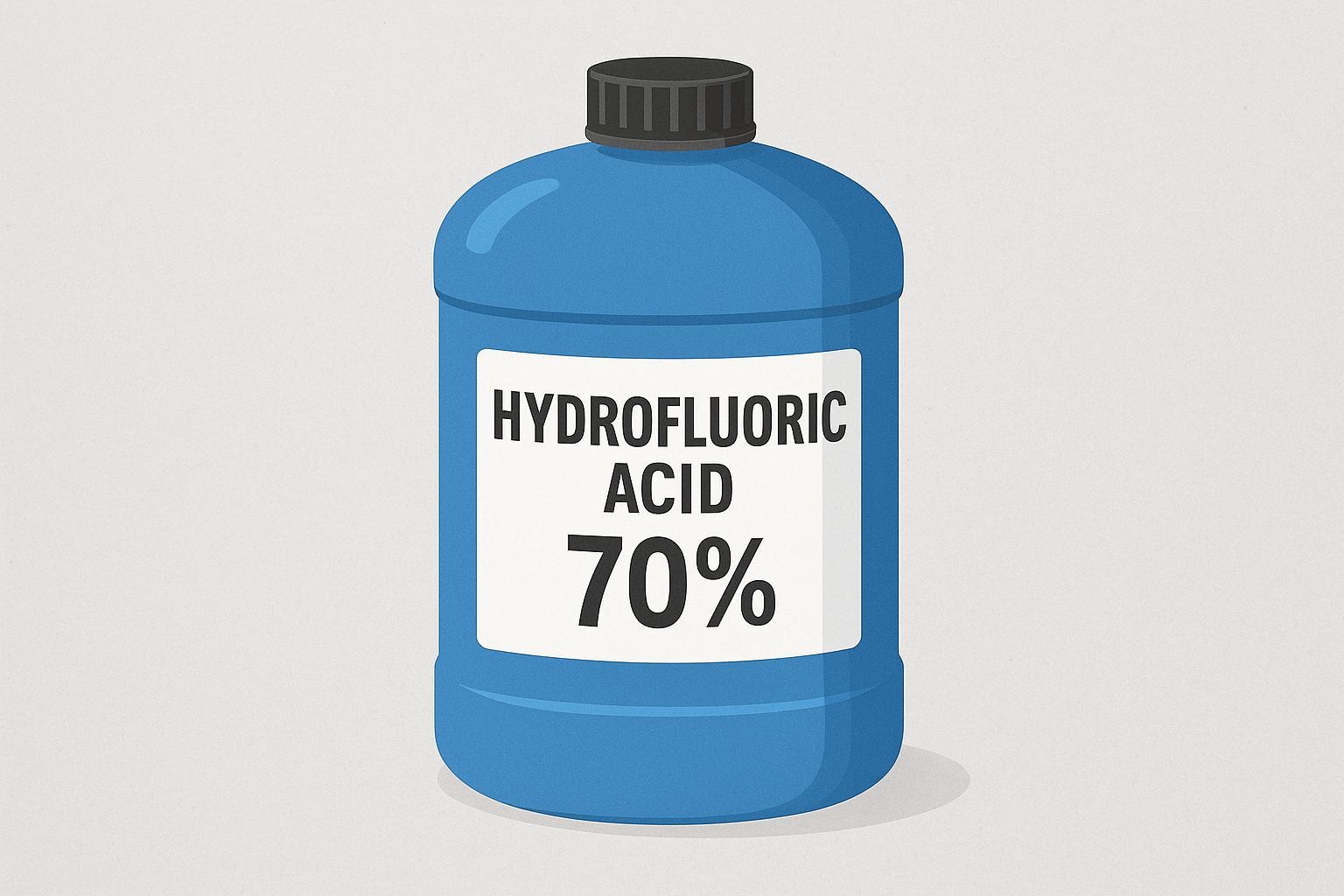
Discover why 70% hydrofluoric acid is preferred globally — balancing reactivity, safety, and cost-efficiency for glass, metal, and semiconductor industries.
Why International Buyers Prefer Purchasing Hydrofluoric Acid with 70% Concentration

FSSF Chemical leads you to discover the industrial uses of fluoroboric acid (HBF₄), including applications in electroplating, metal cleaning, catalysis, pharmaceuticals, and battery technology.
The Comprehensive Industrial Applications of Fluoroboric Acid (HBF4)