How Hydrofluoric Acid is Used as a Plastic Etchant
2024-08-19
Hydrofluoric acid (HF) is well-known for its ability to etch glass, but its use as a plastic etchant is a specialized application that has garnered
significant attention in industrial and scientific fields. The ability of HF to interact with and modify the surface of certain high-performance plastics
opens up possibilities for applications that require precision and durability. In this article, we will explore how HF is used to etch plastics, the science
behind this process, and the practical applications of this technology.
The Chemistry Behind HF and Plastic Etching
Plastics are generally resistant to many chemicals, making them suitable for a wide range of industrial applications. However, this resistance also means
that altering the surface properties of plastics can be challenging. Hydrofluoric acid, with its unique properties, offers a solution for certain types of plastics,
particularly those that contain fluorine, such as polytetrafluoroethylene (PTFE), commonly known as Teflon.
PTFE is known for its low friction and non-stick properties, which make it highly resistant to adhesion and chemical attack. However, when HF is applied,
it can selectively etch the surface of PTFE, creating micro-roughness and modifying the surface chemistry. This process increases the surface energy of the
plastic, allowing it to bond more effectively with adhesives or coatings.
The reaction between HF and PTFE can be understood through the chemical interaction where HF attacks the carbon-fluorine (C-F) bonds in the polymer chain.
This bond is one of the strongest in organic chemistry, but HF’s ability to form stable complexes with fluorine atoms makes it effective in breaking these bonds under
controlled conditions. The result is a surface that is chemically and physically altered, providing anchor points for adhesives or other materials.
Applications of HF in Plastic Etching
1、Adhesion Enhancement: One of the primary applications of HF etching in plastics is to improve adhesion. In industries where PTFE is used, such as aerospace,
automotive, and electronics, there is often a need to bond PTFE to other materials. HF etching creates a surface that can adhere more strongly to glues, coatings, or
other plastics, which is crucial in applications requiring durable bonds.
2、Microfluidic Devices: In the field of microfluidics, where small-scale channels are used to manipulate tiny amounts of fluids, HF etching is used to create detailed
and precise features on plastic substrates. These microchannels often require tight tolerances and smooth surfaces, which HF can achieve by selectively etching the plastic.
3、Medical Devices: The medical device industry also benefits from HF plastic etching, particularly in the production of implants and devices that require PTFE components.
HF etching allows for better adhesion of coatings or other materials, ensuring that the devices perform as required in the human body.
4、Surface Functionalization: Beyond adhesion, HF etching can also be used to functionalize the surface of plastics. By modifying the surface properties, HF can impart new
characteristics to the plastic, such as hydrophilicity or hydrophobicity, which can be useful in various applications, including filtration membranes and lab-on-a-chip devices.
The Process of HF Plastic Etching
The process of etching plastics with HF requires careful control to achieve the desired surface modifications without damaging the material. The following steps outline
a typical HF etching process:
1、Surface Preparation: The plastic surface must be cleaned thoroughly to remove any contaminants that could interfere with the etching process. This may involve
washing with solvents, ultrasonic cleaning, or plasma treatment.
2、HF Application: HF is applied to the plastic surface in a controlled manner. Depending on the specific application, HF can be used in liquid or vapor form. The
concentration of HF and the duration of exposure are critical parameters that determine the extent of etching.
3、Etching Reaction: During the etching process, HF interacts with the plastic surface, breaking chemical bonds and creating micro-roughness. This step requires
precise control to ensure uniformity and to avoid over-etching, which could compromise the integrity of the plastic.
4、Rinsing and Neutralization: After the desired etching has been achieved, the plastic is thoroughly rinsed to remove any residual HF. Neutralization steps may also
be taken to ensure that no acid remains on the surface, as this could affect the subsequent bonding or coating processes.
5、Post-Etch Treatment: Following etching, the plastic may undergo additional treatments, such as drying, further cleaning, or coating application, depending on the
intended use of the etched plastic.

Innovations and Future Directions
Recent advancements in HF etching technology have focused on improving the precision and safety of the process. For example, researchers are exploring the use of
HF in combination with other chemicals to achieve more selective etching or to reduce the concentration of HF required. There is also interest in developing alternative
etching methods that can achieve similar results with lower risks.
In the future, HF etching may be integrated with other surface modification techniques, such as plasma treatment or laser ablation, to create even more sophisticated
and functional plastic surfaces. These innovations could lead to new applications in emerging fields such as flexible electronics, bioengineering, and nanotechnology.
Hydrofluoric acid’s role as a plastic etchant is a testament to its versatility and effectiveness in modifying surface properties. Despite its hazards, when used correctly,
HF provides unique capabilities that are invaluable in industries ranging from aerospace to medical devices. As technology continues to evolve, so too will the applications
and methods for using HF in plastic etching, paving the way for new innovations and advancements in material science.
The Role of Potassium Fluoroaluminate (KAlF₄) as a Flux in Aluminum Smelting
Potassium Hydrogen Fluoride: A Crucial Intermediate in Chemical Production
Related Article
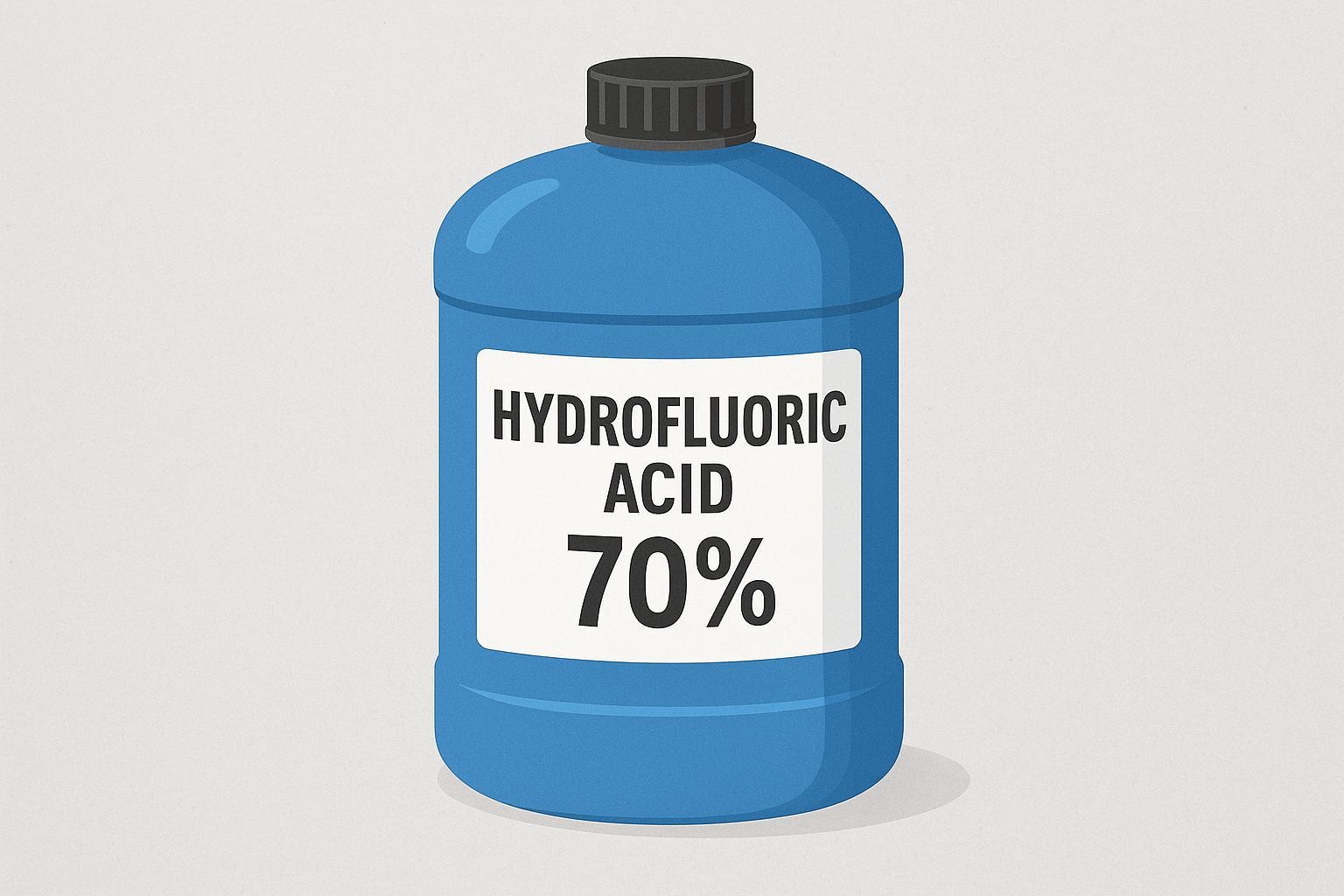
Discover why 70% hydrofluoric acid is preferred globally — balancing reactivity, safety, and cost-efficiency for glass, metal, and semiconductor industries.
Why International Buyers Prefer Purchasing Hydrofluoric Acid with 70% Concentration

FSSF Chemical leads you to discover the industrial uses of fluoroboric acid (HBF₄), including applications in electroplating, metal cleaning, catalysis, pharmaceuticals, and battery technology.
The Comprehensive Industrial Applications of Fluoroboric Acid (HBF4)