Enhancing Aluminum Alloys with Magnesium Fluorosilicate
2024-04-10
Aluminum alloys have long been celebrated for their remarkable properties, making them indispensable in a myriad of industries ranging from
aerospace to automotive manufacturing. However, achieving the desired mechanical characteristics and casting properties in aluminum alloys
requires meticulous control of the alloying elements and production processes. One such element that plays a pivotal role in optimizing the properties of
aluminum alloys is magnesium fluorosilicate.
Magnesium fluorosilicate, a versatile compound, serves as a multifunctional additive in the production of aluminum alloys. Its contributions extend far beyond
mere alloying; it serves as a grain refiner, a degasser, and an enhancer of mechanical properties, thereby elevating the performance and versatility of aluminum alloys to new heights.
At the heart of magnesium fluorosilicate's impact lies its role as a grain refiner. In the aluminum alloying process, the formation of fine and uniform grain structures is
essential for enhancing mechanical properties. Magnesium fluorosilicate facilitates this refinement by promoting nucleation, resulting in smaller and more evenly distributed
grains within the alloy matrix. The refined grain structure enhances the strength, ductility, and toughness of the alloy, while also improving its machinability and surface finish.

Furthermore, magnesium fluorosilicate serves as a potent degassing agent during alloy production. The presence of dissolved gases, such as hydrogen, can compromise
the mechanical integrity of aluminum alloys. By effectively removing these gases from the molten metal, magnesium fluorosilicate minimizes the risk of porosity and defects,
ensuring the integrity and quality of the final product.
In addition to its degassing capabilities, magnesium fluorosilicate acts as a deoxidizer, combating the detrimental effects of oxygen and oxide impurities in aluminum alloys.
By reacting with oxygen and other oxides present in the melt, it prevents the formation of inclusions and ensures the purity of the alloy. This purification process further enhances
the mechanical properties and casting characteristics of the alloy, making it more suitable for a wide range of applications.
The incorporation of magnesium fluorosilicate into aluminum alloys yields alloys with superior mechanical properties, including enhanced tensile strength,
improved fatigue resistance, and superior elongation characteristics. These enhancements not only broaden the scope of applications for aluminum alloys but also offer
unparalleled performance in demanding environments.
In conclusion, magnesium fluorosilicate stands as a cornerstone in the quest for high-performance aluminum alloys. Its ability to refine grains, remove impurities,
and enhance mechanical properties makes it an indispensable additive in modern alloy production. By harnessing the potential of magnesium fluorosilicate, manufacturers
can unlock new possibilities and push the boundaries of aluminum alloy performance, paving the way for innovation across industries.

In the ever-evolving landscape of materials science and engineering, magnesium fluorosilicate emerges as a catalyst for progress, driving advancements in aluminum alloy technology
and shaping the future of manufacturing. As we continue to explore new frontiers and push the limits of what is possible, magnesium fluorosilicate remains a steadfast ally,
empowering us to achieve greater heights and redefine the boundaries of excellence in alloy design and production.
The Impact and Application of Potassium Bifluoride (KHF2) in the Glass Industry
Sodium Fluoroaluminate: Versatile Applications in the Metallurgical Industry
Related Article
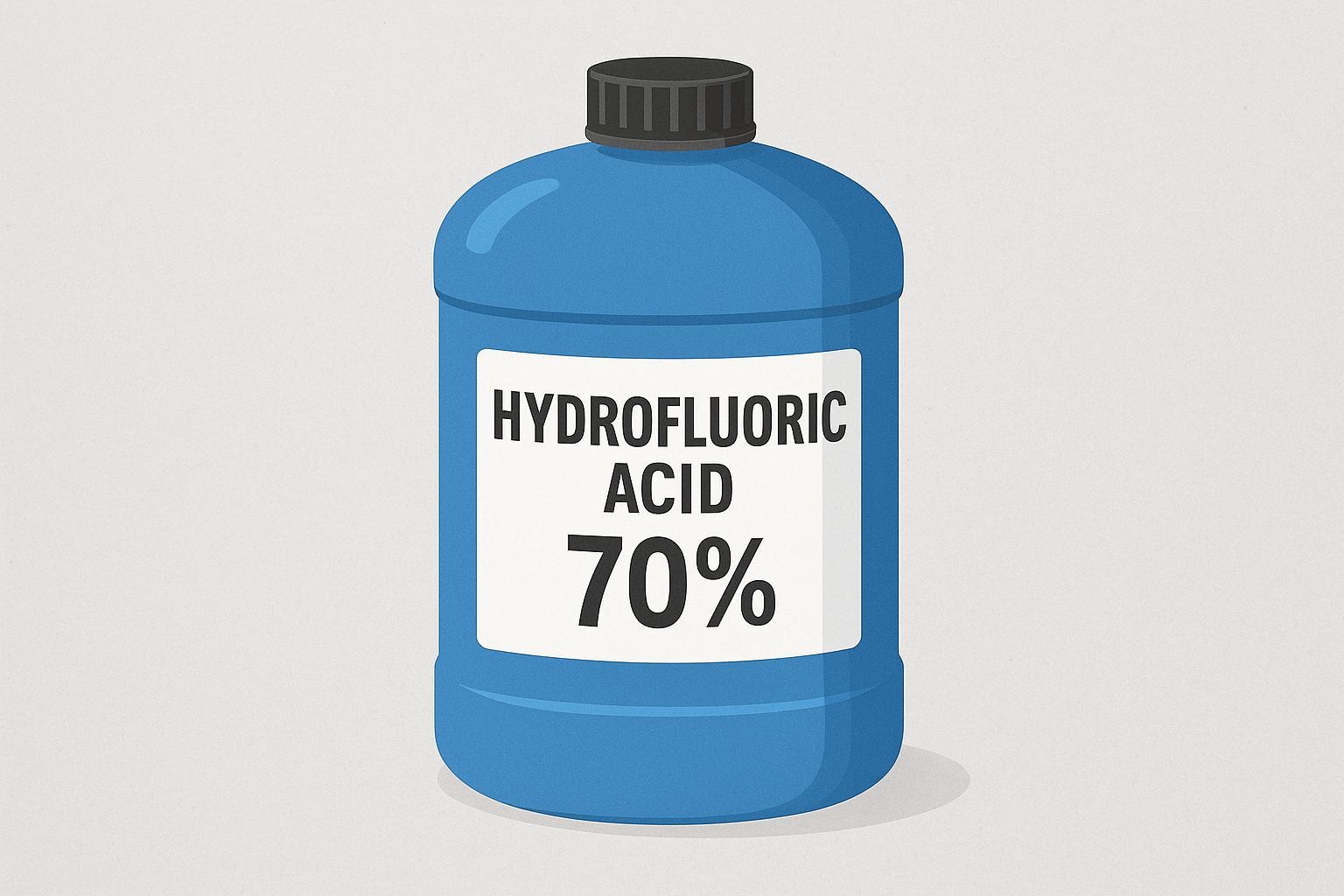
Discover why 70% hydrofluoric acid is preferred globally — balancing reactivity, safety, and cost-efficiency for glass, metal, and semiconductor industries.
Why International Buyers Prefer Purchasing Hydrofluoric Acid with 70% Concentration

FSSF Chemical leads you to discover the industrial uses of fluoroboric acid (HBF₄), including applications in electroplating, metal cleaning, catalysis, pharmaceuticals, and battery technology.
The Comprehensive Industrial Applications of Fluoroboric Acid (HBF4)